Showing posts with label Palestine. Show all posts

Wednesday, 2 July 2014

KILLED JEWISH BOYS HAD NAMES AND IDENTITIES. KILLED PALESTINIAN TEENAGERS ARE JUST NUMBERS.


I am increasingly worried that the IDF (Israeli Defense Forces) hand in hand with settlers will wipe out Palestinians and Palestine from the map in the act of vengeance for a terrible act of kidnapping and killing of teenage Jeshiva students.

I hope that there are Israelis that will be able to stop this rise of violence before its too late. I realize it must be difficult to feel any compassion for Palestinians, for the 'other' when one is broken by pain. I am calling exclusively for Israelis because, contrary to the media broadcast, in this conflict it is the Israelis that have all cards in their hands. It is Israeli governement that needs to really want peace for peace to emerge.

Yes. I am very sorry for the death of teenage Jewish boys. It was an inhumane act.

I am equally sorry for the death of Palestinian boys in the 'search' operation and the latest Palestinian victim killed in the likely act of revenge. It was also inhumane.

And I am increasingly upset that once again Israeli lives seem to be worth more than Palestinian lives.

In case of Jewish boys that went missing and found dead - I could learn their names and their stories, the condolences and condemnation were sent from the entire world, the burial ceremony transmitted live in most important media outlets. It had been news number #1 for the past few days.

Nobody reported the side story: that settlers in Hebron and South Hebron Hills, where the boys were abducted, are the most violent groups in the West Bank and that illegal Jewish settlements installed in the heart of Palestinian city make every day lives of Palestinians in Hebron - a hell on earth, that settleres of South Hebron Hills confiscate Palestinian land, attack Palestinian kids daily, that Palestinian villages of South Hebron Hills, in the area where kindapping took place, have been converted into 'firing zone' - the army camp for Israeli army. No, this does not legitimize the horrendous murder. But it adds an important context that helps to understand.

Hamas was to blame immediately. Perhaps it is the case, but Israel failed to present any proofs for that. Nevertheless Israel 'preventively' bombarded Gaza and blown up the houses of the 'suspects' - made a hell out of already hellish life of millions of Palestinians. For a democratic state it is illegal to use collective punishment. It is illegal to punish for a most horrendous crime without a trial. For a human being it is inhumane to punish those who are not guilty. 

In case of Palestinians that were killed in the 'search' operation ... we never learned their names,  their remained just numbers, without faces, there remained just 'casualties'  - a 'side - product' of the 'legitimate' search in which Israeli army literally razed Palestinian cities and arrested hundreds of Palestinians. 


This morning a Palestinian boy (17 was abducted from Palestinian Jerusalem neighborhood of Beit Hanina (surrounded by settlements). His name was Mohammad Abu Khdair. He was kidnapped, brutally murdered and left in West Jerusalem forest.

Israeli authorities ask all sides to 'wait' and warn against jumping to conclusions until it is proven that it was act of revange.

Let's wait. And hope it will not be too late.


Wednesday, 23 January 2013

Izrael po wyborach. Ze wstrząsami, ale na prawo


Tak jak się spodziewano, Netanyahu wybory wygrał, ale wychodzi z nich mocno osłabiony. Jego blok Likud - Nasz dom zdobył wprawdzie najwięcej mandatów w Knesecie i będzie próbował utworzyć koalicję z ultra-ortodoksami oraz popieranym przez osadników radykalnym Domem Żydowskim. Pojawia się jednak kłopot, którego Bibi nie brał pod uwagę w najgorszych snach - mandaty wszystkich prawicowych partii to za mało, żeby utworzyć stabilną koalicję.

Izraelski Palikot języczkiem uwagi

Monday, 21 January 2013

Dzisiaj wybory w Izraelu. Trzy powody, dla których warto je śledzić.

Księżyc nad checkpointem w Qalandii. Okupacja - temat nieobecny w kampanii wyborczej. Photo by Keryn Banks
Dziś odbywają się kolejne Knessetu, izraelskiego parlamentu, w których prawie na pewno zwycięży prawicowa koalicja pod przywództwem obecnie urzędującego premiera Izraela Benjamina Netanyahu - Likud - Nasz Dom Izrael. Jeśli tak się stanie, “Bibi” Netanyahu zostanie najdłużej urzędującym premierem Izraela po Ben Gurionie. Przypuszczalnie Likud - Nasz Dom wstąpi w koalicję powyborczą grupą Żydowski Dom, jeszcze bardziej prawicową grupą  niedawnego szefa kampanii Netanyahu. Ale to nie Netanyahu powinien przykuwać uwagę w tych wyborach, ale obecność i nieobecność pewnych tematów.


Thursday, 17 January 2013

Bab Al Shams. Historia zniknięcia.


Bab Al Shams było trochę jak nasze Szkalne Domy. W ubiegły piątek 250 Palestyńczyków zbudowało miasteczko namiotowe w pokojowym geście protestu przeciwko izraelskim planom budowy 4000 tysięcy domów na tym obszarze. Dla jasności, mówimy o obszarze należącym do Palestyny, po palestyńskiej stronie muru. Najpierw izraelska armia odgrodziła dostęp do miasteczka dziennikarzom, potem w środku nocy 500 żołnierzy wyrzuciło z namiotów jego mieszkańców aresztując kilku z nich. Dziś buldożery izraelskie zniszczyły pozostałe namioty. Armia dokonała eksmisji i zburzenia pomimo wyroku Sądu Najwyższego Izraela ‘zamrażającego’ plany wysiedlenia miasteczka. Tak wygląda ‘jedyna demokracja Bliskiego Wschodu’ w działaniu. 

Bab Al Shams było jak piękny sen. Pewnie dlatego nie mogło istnieć zbyt długo.

Miasteczko Bab Al Shams było jak sen, bo powstało w obszarze, na którym nie śni się Palestyńczykom budowanie domów. Nie dlatego, że ziemia nie należy do nich. Przeciwnie, miasteczko powstało, jak ustalił izraelski dziennik Haaretz, na ziemi należącej wyłącznie do Palestyńczyków, mieszkańców pobliskiego osiedla At Tur. Ale w Palestynie Palestyńczycy nie mogą budować na swojej ziemi.


Bab Al Shams było jak sen, bo choć na chwile odwracało zasady gry.

‘My synowie i córki Palestyny - pisali organizatorzy miasteczka - z każdego zakątka tej ziemi oznajmiamy powstanie Bab Al Shams. My ludzie bez pozwoleń od okupanta, bez pozwoleń od nikogo, siadamy tutaj dzisiaj, ponieważ to jest nasza ziemia i mamy prawo do zamieszkania na niej [...]
Przez dekady Izrael prowadził politykę faktów dokonanych na ziemi i społeczność międzynarodowa milczała w obliczu tych działań. Nadszedł czas na zmianę warunków gry i ustanowienie faktów dokonanych na ziemi - naszej ziemi’.
I rzeczywiście Bab Al Shams odwróciło zasady gry. A raczej przywracało normalne zasady, w których ludzie mają prawo budować na swojej ziemi w swoim kraju. Tymczasem od wielu lat każda choć najmniejsza struktura, która powstaje w obszarze C, czyli na 62% Zachodniego Brzegu pozostającego pod całkowitą kontrolą armii izralelskiej dostaje tzw. ‘demolition order’ - nakaz wyburzenia (zobacz krótki przewodnik po geografii okupacji). Tak było ze szkołą z opon i ziemi w beduińskiej wiosce Khan Al Ahmar, tak było z zagrodami dla zwierząt w Nabi Samwil i w setkach innych przypadków.

Saturday, 10 November 2012

Broken pieces of Abu Laban’s life. Mount of Olives off a tourist trail


Recent wave of demolitions makes us realize how physically temporary lives of Palestinians are. This temporariness seems be in the weird way ingrained in the Palestinian existence. Being born with ‘a Palestinian condition’ means that nothing can be taken for granted, nothing is for sure. Perhaps this is why Palestinian families we meet are so bloody resilient to the terrible forms of displacement they are experiencing. In some cruel way they are prone to dispossession that continues to happen. They are born with the amazing ability to sustain and re - emerge no matter how demolished and framgemnted their lives can become.

But looking at Abu Laban’s destroyed life it is difficult to imagine how he will be able to put together all these broken pieces of his livelihood. 


Tuesday, 6 November 2012

Week of cruelty and despair - Palestinian families of East Jerusalem loose their properties at the hands of the Israeli forces.


In less than a week four families lost their homes or livelihoods in demolitions and evictions and dozens of new demolitions have been ordered. Nobody here knows the answer to the reason for this intensity of this new wave of destruction. Some say that before the upcoming Israeli elections Netaniyahu wants to appease his electorate by proving than he can be even tougher on Palestinians than usually. Other say that Jerusalem municipality has released money for new demolitions before the end of the year. No matter what and why, these are not easy nights for Palestinian families in East Jerusalem and around.

The way demolition and evictions have been executed follow certain path of cruelty and disproportionality. While each of the families that lost their houses and properties deserve to tell their stories separately let me first introduce to some basic methods in which the enterprise of depriving people of their house has been carried away.


 How demolitions are carried away

  • Palestinian families are often not aware of the imminent threat of demolition or eviction. That is either because demolition orders have not been delivered properly or because demolition orders are delivered only in Hebrew in a country where Arabic is an official language. And many Palestinians do not read Hebrew. 
  • Demolitions are carried out at night or early in the morning to make sure that the affected will family be unable to resist and in the most vulnerable mode. They are carried out at night also because the only democracy in the Middle East cares about its own PR. It would be a very bad picture to see how the army destroys a house of an elderly lady or young family with seven kids. 
  • There is a complete lack of proportionality - demolitions look like huge military operations with dozens of police, border police and special forces involved as well as the use of heavy military cars and, of course, bulldozers. Often against light animal structures like in Nabi Samwil. 
  • The affected families are given little or no time to evacuate their properties. While the demolitions are completed people are left alone with the rumbles of their house and belongings. They are offered no compensation and no assistance of any kind by Israeli authorities. What they do receive however is a check for bulldozers’ work. 
  • Victim families need to rely on few aid agencies and NGOs like Red Cross or ACTED are able to offer them immediate relief assistance like shelter, water or food, but certainly unable to provide long term help. Even the aid is not immediate. Families need to wait for UN OCHA assessment and after this has been issued other agencies could work. Sometimes it can be days before help reach the victims.

Read stories about four families that lost their properties this week and see the photographs

Salim and Arabiya Story. Beit Arabyia Demolition in Anata - coming soon. 
Fatma Al Huwa Story. A house taken over by settlers in Al Tur - coming soon. 


Tuesday, 23 October 2012

Dzień, w którym Izrael zniszczył mi dom i wystawił rachunek za zburzenie.

Jedziemy do Beit Haniny, podmiejskiej dzielnicy Jerozolimy, żeby zobaczyć dom Sufiana Tahy. A raczej to, co zostało z domu Tahów, który w poprzednią niedziele został zupełnie zburzony przez izraelskie buldożery. Parkujemy przed płotem, wchodzimy do środka ... i przed naszymi oczami staje wielka hałda gruzu i pociętego metalu.

Sufian, który pracuje jako tłumacz dla Washington Post i Guardiana, zapala papierosa i opowiada w szczegółach jak w niedzielę przyjechały wielkie buldożery i w godzinę, a może półtorej na oczach całej jego rodziny, wszystkich sąsiadów i dzieci zburzyły im dom oraz stajnie jego trzech koni. Czy zdążyli zabrać wszystko? Nie, nie zdążyli. W środku zostały niektóre meble. Jeśli straciłeś oko nie martwisz się o okulary - wyjaśnia Sufian. I co powiedzieć człowiekowi, którzy właśnie stracił wszystko? I to nie z powodu klęski żywiołowej lecz oficjalnego nakazu zniszczenia wystawionego przez izraelski sąd.


Do naszych nóg łasi się kudłaty kot. Zabraliśmy ją do rodziców - wyjaśnia Sufian- ale wróciła tutaj. Tutaj jest jej dom. I tak mieszka samotnie w tych ruinach. Widząc skalę zniszczeń i wykorzenienia dziwimy się, że i kot nie dostał nakazu opuszczenia ziemi.

For English check this link

Czytaj dalej/ przycisk read more

Friday, 12 October 2012

It’s Shabbat habibti, wszyscy jedziemy tym samym sherutem a ja tłumaczę Izraelczykom dlaczego ‘lubię tych strasznych Arabów’.

Begamon at Yosi's house. Favorite game
of Palestinians and Israelis.

W poniedziałek po południu wyruszam do Hadery na wieczorne przyjęcie Sukkot u Yosiego w Haderze (nadmorska miejscowość na północ od Tel Avivu, a Sukkot to żydowskie święto). Po drodze kupuję kwiaty dla Rachel, partnerki Yossiego. Odczuwam pewnego rodzaju przyjemność w kupowaniu kwiatów u arabskiego sprzedawcy na Salahadin we Wschodniej Jerozolimie dla kogoś kto ‘jest po drugiej stronie’. Właściwie to powinno być to normalne, ale w tym kraju (w tych krajach) przekraczanie granic kulturowych jest równie proste jak równie trudne.  Tak czy inaczej  wybieram różowe storczykowe kwiaty połączone z granatowym suszonym czymś w rodzaju lawendy (kwiaty będą ważne w dalszej części mojej opowieści).

Pan sprzedawca jest nieco zaskoczony tą kompozycją a już w szczegóności tym, że nie chcę żadnej ozdoby ani błyszczącego papieru. Jak ja to dowiozę w typ upale? - pomyśłałam. Hadera z perspektywy Jerozolimy brzmi jak inna galaktyka, choć to tylko sto kilometrów.  Czekają mnie przynajmniej trzy różne przesiadki. A do tego, Sukkot to żydowskie święto, więc kolejny raz w tym miesiącu nie działa transport publiczny. W teorii. A raczej jeżdżą tylko arabskie sheruty. I taksówki. Za specjalną cenę. Żydowskie święta oznaczają, że z palestyńscy taksówkarze z rozbrająjącą szczerością za każdym razem mówią : it’s Shabbat habibti! 45 Shekels. Mimo, że normalnie jest 30.  Choć czasem Żydzi przydają się do czegoś Palestyńczykom.

Tuesday, 9 October 2012

Good morning Qalandia


It’s 3:50AM when my alarm clock goes off and I feel terrible. Some 20 minutes later Luc and I set off for Qalandia to the sounds of the first muezzin call for prayer this day. As we reach the checkpoint we already see 3 rows of around 20 men praying at the exit of the terminal. They never pray before the entrance, they want to leave the praying after they had left behind hassle of passing through the checkpoint.

I go to the Ramallah side of the terminal. Luc will stay on Qualandia side to count people who crossed. This early in the morning this whole experience makes me sick. The terminal is empty, cold and quite scary. Its still minutes before the sunrise, so the air is still humid and smells of urine coming from the corners of the terminal. 


On the other side, I slowly adjust to the checkpoint reality. There will be more and more people coming in with every minute. I have my little morning routines at Qalandia. I greet the bejgala and zatar seller and do the first round to check how many ID boots are open. At this point of day I have a ritual conversation with one of the sherut drivers. Married? - Yes. Children? - No. Why no children? Than I lift my hands to heaven - Insallah - I say. Where are you from? Bulanda! Bulanda expensive? (always!) Hmm, I don’t know, it depends. How much chicken? - he never gives up. The whole chicken? - Yes. I don’t know about the whole chicken. One kilo of chicken is around 25 shekels.  Cheaper than Palestine - he always exclaims at that point!


Saturday, 29 September 2012

Bedouin party at Khan Al Ahmar - zdjęcia/photos


We are invited to Khan - Al Ahmar Bedouins to take part in a theater performance for kids and adults. As early as 2 hours before the show, just after the sunset, kids start bringing their little school chairs to the top of the hill waiting impatiently for the start of the show. They cannot standstill. It’s not that often that the real artists from the real theater (Jenin Theater) come and visit and perform a show based on their individual, Khan al Ahmar's stories. Stories of suffering, resistance and resilience.


Klan Al Ahmar community is one of the Bedouin communities that we visit regularly. They live in the small camp in the dessert, made of tents and wooden terraces, as close as 20 minutes drive from East Jerusalem. Jahalin Bedouins have been living in this area ever since the early fifties after they had been exiled by Israel from their original homeland in the Negev dessert. Once, Khan al Ahmar used to be a quiet camp surrounded by hills and valleys of Judean dessert. Today the camp is shrinking due to expansion of illegal Israeli settlement of Ma’ale Adumin. They are now stuck between 6 lanes motorway, sewage dump and ever increasing settlement. Even their livestock’s movement is constraint and the animals are not allowed to walk outside the camp to the nearby hills. Apparently, they pose a security threat to Israel.

Thursday, 27 September 2012

Shu’fat. Ahlan wa sahlan w jerozolimskim gettcie


Im Khatib, seniorka rodziny Khatib,
w Shu'fat od ponad 40 lat CC-BY
W każdą środę jedziemy autobusem numer 7 do Shu’fat, obozu dla uchodźców położonego o 15 minut drogi od centrum Jerozolimy. Niełatwo ten autobus odnaleźć, bo nikt nie chce nam uwierzyć, że jedziemy właśnie do obozu w Shu’fat, a nie pobliskiego osiedla dla osadników, do którego jeździ zupełnie nowy i elegancki tramwaj. 

Obóz w Shu’fat kilka lat temu został kompletnie otoczony murem, z którego można się wydostać tylko jednym wyjściem. Wyjście to swobodnie można zamknąc ‘ze względów bezpieczeństwa’ i wtedy Shu’fat staje się jedną wielką klatką. Shu’fat jest otoczony nie dlatego, że leży na jakieś granicy, ale po to żeby odciąć i odizolować to skupisko palestyńskiej ludności od reszty aglomeracji jerozolimskiej. Do Shu’fat wchodzi się przez wielkie metalowe wahadłowe drzwi, jak do więzienia, w którym żyją mężczyźni, kobiety, a przede wszystkim cała masa dzieci. Powstanie muru dookoła obozu jest obecnie największym zmartwieniem dla jego mieszkańców. Większość z nich ma jerozolimskie dokumenty - w końcu od pokoleń tutaj mieszkali, niektórzy nawet w Starym Mieście. Te dokumenty to jedyny powód czyniący życie w Shu’fat znośnym - pozwalają one na legalną pracę w Jerozolimie i możliwość wydostania się z obozu. Od miesięcy jednak mieszkańcy Shu’fat spodziewają się najgorszego. Skoro odcięli nas murem, to pewnie niedługo odbiorą nam też możliwość legalnej pracy i przedostawania się na zewnątrz muru - tę obawę słyszymy w Shu'fat ze wszystkich stron.

Monday, 24 September 2012

I showed my ankle to a grocery seller and I feel exposed

After having spent 3 weeks in Palestine wearing our programme’s vest, long sleeves and and loose trousers I feel completely exposed just by showing lower parts of my legs. I must have reconnected with my feminine me I had left behind. I suddenly feel really uneasy about this reclaimed ‘femininity’ that I show in public. Exposed. Provocative. Naked. 
 
Last week in the midst of the Kate Middleton’s breast crisis I went to an indoor's swimming pool. It was a women only swim hour. To my surprise I found myself surrounded by five ninjas and I was the only one wearing bikini. After a while it became clear that the black dressed nijas are female bodies wearing nothing else but a swim version of hijab - a long black sleeved swimsuit with a very loose maxini on top (an opposition of bikini - I am lacking good vocab here!). Ninja ladies smiled at me and I smiled back proudly thinking how much I actually embrace this cultural diversity and how much the Dutchess of Cambridge royal exposure feels really gross from the perspective of this East Jerusalem YMCA swimming pool. Well, I should have learned from that event. 

Saturday, 15 September 2012

Boycott us all!

Jusuf Daher, a christian Palestinian of
 Kairos Palestine. Views expressed
 in this post are his personal and might not reflect
 views of his organization. 

Voices from the 'End the occupation' movement (2)


"Stop giving us money. The aid system that the Western powers provide to the PA (Palestinian Autonomy) actually normalizes the occupation” says Jusuf Daher, a Christian Palestinian and one of the leading figures of Kairos Jerusalem, the network that facilitates co - operation between different Palestinian and international churches in their struggles to halt Palestinian misery in the Israel/Palestine. ‘The situation right now is terrible. It has never been that bad. But yes, I believe we can live peacefully here together with Jews and with Muslims, like we did for thousands of years’ - ads Daher.

Western aid to PA prolongs the occupation
According to Daher’s view, the foreign aid that PA gets allows to create a completely artificial economy in the West Bank which indeed offers jobs and helps to cover for the basic needs of the population, but at the same time creates the false impression of stability. ‘You cannot run a healthy economy when Israel controls all imports and exports’ - he explains. What is more, Israel,  as the occupying power is mandated by law (IHL International Humanitarian Law) to care for the population under occupation. ‘This means that actually when you pay money to the PA you pay Israeli bills’.

Certainly, there is a humanitarian aspect to it that goes beneath political one. What the aid agencies try to do is to mitigate the results of the occupation and to make life in a West Bank a bit more bearable for the people. Without it, there would be even less hospitals, even less schools and even less jobs. ‘The thing is that at the moment people are more interested in their economic needs than political resistance' - explains Daher. In his view  the PA backed by the Western money actually diverts people from opposing the occupation to focusing on the consumption needs.

Monday, 13 September 2010

Sometimes doing something poetic can become political and sometimes doing something political can become poetic


What sort of artist Francis Alys is? What is his artistic discipline? I was trying hard to explain to a friend when I got back from exhibition at Tate Modern. Nope, not a painter, not a pianist, not even a photographer. Hmm I guess the closest I could figure out was that he is an artist of society. Socartist. His work come from observation of culture, society and tensions that exist within them. He's work comes from translating political into poetic. From exposing extraordinary in ordinary. Born in Belgium he lives and works in Lima. He's done couple of spectacular things - like a project about moving dunnes. He convinced hunderds of students to get together and do something that is purely impossible - move amazingly huge dunne. Larger than village, larger than anything that could be seen in horizon. A spectacular example of human collaboration that could be stronger and more powerful than nature, than frustration. And estetically beautiful.

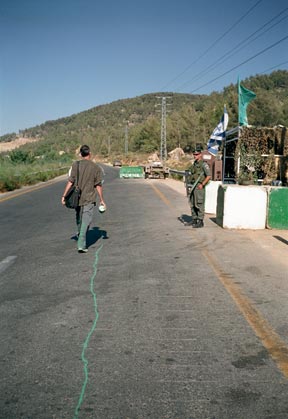
For personal reasons, the most interesting out of his projects was the film called Green Line. Breathtaking documentary where he tries to recrate The Green Line. The line, drawn in 47 (likely) that was supposed to divide Palestine into two independent countries. Alys takes a green paint, makes a hole in the can and walks along the original green line - he starts his joureny well before Jerusalem, corssing Old Town, Jewish Quater, Arabic Quater, East Jerusalem, Palestinian Villages, posh Israeli neighbourhoods, Jewish Orthodox District. His journey makes the viewer think about the complexity of borders - its power to create here and there, to divide, to mark us from the other - but also, in a strange way, a complicty, collaboration of the two sides. It becomes very clear that one side cannot exist without the other. What's the most amazing is that actually we see more than one film. In his trial to portray many different points of veiw, variety of simultaneous narratives that are emerging from recration of the green line - he recorded 12 different voice overs. Each of them marks a conversation that happened spontanously when he presented the film to different people - Jews and Palestinians, architects, campagner, fighters, people living there ... and elswhere. So we hear 12 stories commenting the same footage - different feelings, different angles, different ways of resolving the conflict .. and the same one hope.

If there is one single thing I could ever done in my life - this would be it. Absolutely stunning.

http://www.tate.org.uk/modern/exhibitions/francisalys/roomguide9.shtm